Financial Daily from THE HINDU group of publications
Thursday, Jan 05, 2006


News
Features
Stocks
Shipping
Archives
Google

Group Sites

Industry & Economy - Infrastructure


Pvt sector willing to invest in infrastructure projects: FICCI President

Our Bureau


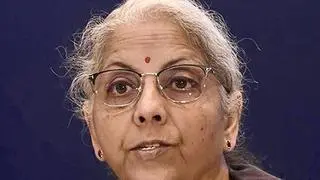
Mr S.K. Poddar

New Delhi , Jan. 4

COUNTERING the notion that the private sector is reluctant to invest in infrastructure projects in the country, the new President of Federation of Indian Chambers of Commerce and Industry (FICCI), Mr Saroj Kumar Poddar, has said that the private sector is more than willing to enter this sector, provided the Government offers projects, after obtaining all sanctions and approvals.

"If the Government offers all approved projects on a globally competitive basis, the private sector would be willing to take up such projects. Infrastructure projects have a tendency to get stuck with various approvals, which results in time and cost overruns. So, if `approved' projects are offered, we are ready to take them up. The private sector has the management capability and technology to implement such projects. This would also be the real test for the private sector," Mr Poddar told Business Line.

Mr Poddar, Chairman of Gillette India Ltd, took over as President of FICCI at the conclusion of its 78th annual session on December 25.

On labour reforms, the new FICCI President clarified that the corporate sector was not demanding a hire-and-fire policy. He said, "It is a wrong notion that labour reforms are meant to be anti-labour."

What the corporate sector is looking for is "flexibility with security" for the workers. That will open up more employment opportunities and if the labour becomes surplus, they can be given some financial security, he said. "In any case, as the economy grows, there would be more demand for skilled labour and there could be a situation where labour going out from one unit could find ready employment in another company, mainly because they would be trained labour. The Government should consider this fact and emphasise on providing more employment opportunities instead of protecting the 7 per cent of the labour force which is in the organised sector," the FICCI President said.

On the corporate sector's social responsibility, especially in the context of job reservations, Mr Poddar said forcing it on the industry would prove counter-productive. "If someone does it willingly, it is fine, but making it mandatory would do more harm than good," he said.

On the issue of the increasing role of regulation in the Indian economy, Mr Poddar said corporates should have no difficulty with issues such as Clause 49 of the SEBI's listing requirements. "India's record in corporate governance is very good. We have not had incidents like Enron in this country."

Admitting that the fringe benefit tax was creating problems for the corporate sector, the FICCI President said every clause was prone to different interpretation. "Why can't we have a transparent system where the Government makes it mandatory for all companies to put on record all payments to employees, under whatever head, and then tax the total amount appropriately. It could be like the US system where the employee gets one single cheque from the company," he said.

He said buy-back of shares was an effective way of restructuring corporate balance sheets and hence buy-back and open offer transactions should be entitled to capital gains tax benefit. He said when Indian companies raise capital through the overseas market, the shares of such companies listed overseas should also qualify for capital gains tax benefit.

On how corporate India was poised to take on the second phase of competition that would come with the Free Trade Area regime, Mr Poddar said the Indian industry had successfully met the first phase of competition that came with the foreign direct investment regime. "It is now time for the Indian industry to scale up their operations and look for growth in the international market and not just the national market. We have the competence but not the scale to play in the global arena, and to achieve that strength, we need scalability and infrastructure."

More Stories on : Infrastructure

Article E-Mail :: Comment :: Syndication :: Printer Friendly Page


Stories in this Section
Fog, cold wave in North may extend to more areas


SBT increases NRE, FCNR deposit rates
Pondy's Plan outlay fixed at Rs 1,410 cr — Promotion of public-private partnership commended
India, Japan agree to consider economic pact
`For SAFTA to deliver, tariffs should come down within stipulated time'
Pvt sector willing to invest in infrastructure projects: FICCI President
`Oil companies' capex will take a hit due to subsidy burden'
First phase scrutiny to cover 3,000 drug patent requests
Centre's move to cut duty on medicines hailed
AP mulls setting up SPV for 2 mega power projects — Industrial tariff to be lower next fiscal
Steel prices likely to remain firm this year
Textile exporters face non-tariff barriers in US
Rotary Intl to focus on global water resources management
`Second phase FM privatisation can fetch Rs 1,350-cr revenue'
KINFRA's move to boost food processing industry pays off
Labour reforms: AEPC team meets Prakash Karat
Central assistance scheme for scientists to be liberalised
Sibal for multi-dimensional strategy to boost research
Govt receives more than 30 EoIs for Maruti stake
GoM discusses FDI in single brand retail
Meet on digital libraries in Coimbatore
Kovai flower show from Jan 27-29
Spices Board to conduct W. Asia market study
NY dept bans 3 ayurvedic drugs for high lead, mercury content
Fresh coat


The Hindu Group: Home | About Us | Copyright | Archives | Contacts | Subscription
Group Sites: The Hindu | Business Line | The Sportstar | Frontline | The Hindu eBooks | The Hindu Images | Home |

Copyright © 2006, The Hindu Business Line. Republication or redissemination of the contents of this screen are expressly prohibited without the written consent of The Hindu Business Line