Financial Daily from THE HINDU group of publications
Monday, May 08, 2006

News
Features
Stocks
Cross Currency
Shipping
Archives
Google

Group Sites

Markets - Events
States - Tamil Nadu


Demystifying the capital market

Our Bureau


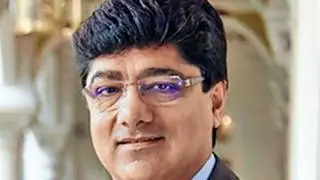
Mr V. A. George, President, India Cements Capital & Finance, addressing management students at St. Joseph's Engineering College, Chennai at a Business Line club lecture.

Chennai , May 7

What will happen if a master strategist, investment analyst, financial expert, a banker to banks and a master storyteller rolled into one is invited to address a gathering of bubbly management students on `Capital Market and the Sensex'? A world tour of storytelling.

This is exactly what Mr V. A. George, President, India Cements Capital & Finance, did in his speech at St. Joseph's Engineering College, Chennai at a Business Line club lectures.

To his query, the students said they would like the terms share capital, financial institutions, venture capitalists, merchant bankers, private equity fund, public issues, stock market, portfolio management and insider trading explained to them.

Mr George started by asking a student what he would do if he were to start a company with an investment of Rs 1 lakh. The answer went like this: I have Rs 25,000 and will borrow the rest from banks. But when the business grows and requires Rs 10 lakh you will borrow money from friends and that becomes share capital. But if the capital invested by yourself is lesser than that of your friends, then your friends can take over your company. In the capital structure of your business, you should have a debt portion, said Mr. George. What is the risk in borrowing? Whether the business is profitable or loss-making, interest has to be paid. The business will collapse if you incur losses and you continue to pay interest, he added. Therefore, balancing capital structure is a prerequisite for starting the business enterprise.

When the business grows from Rs 10 lakh to Rs 10 crore, you can first take funds from private equity funds or the venture capitalists. In this case, the funds are locked. When the business grows further to Rs 100 crore, one can go public and raise money. Today, to go in for a public issue, one has to abide by lots of rules and regulations to ensure retail investors are not cheated, explained Mr George. Venture capitalists will start selling their shares once the company is listed. But, he added, they will sell the shares slowly, otherwise the price will fall drastically.

Most people do not have time to read and invest and many investments are made based on rumours. To fill this gap, mutual funds came into being. Portfolio management helps an investor by investing in the shares that he is interested in investing.

It was the greed of the stockbrokers that is responsible for the scams, Mr George said. Harshad Mehta's and Ketan Parekh's deeds led to the capital market being cleaned up, he remarked, adding that manipulation has been eliminated to a large extent and operations and transactions made transparent.

More Stories on : Events | Tamil Nadu

Article E-Mail :: Comment :: Syndication :: Printer Friendly Page


Stories in this Section
Banning Karvy may create monopoly in MF registry


Social security funds - need of the hour
What counsel give you in this weighty cause?
`Investors will get used to this level of volatility'
Demystifying the capital market
Momentum to continue


The Hindu Group: Home | About Us | Copyright | Archives | Contacts | Subscription
Group Sites: The Hindu | Business Line | Sportstar | Frontline | The Hindu eBooks | The Hindu Images | Home |

Copyright © 2006, The Hindu Business Line. Republication or redissemination of the contents of this screen are expressly prohibited without the written consent of The Hindu Business Line