Business Daily from THE HINDU group of publications
Tuesday, Sep 26, 2006
ePaper


News
Features
Stocks
Cross Currency
Shipping
Archives
Google

Group Sites

Opinion - Economy
States - Other States
To achieve a turnaround in Bihar

Shaibal Gupta

Historical disadvantages, limited post-Independence development strategies, and the vivisection of the State, have crippled the public financial and economic structure of Bihar.


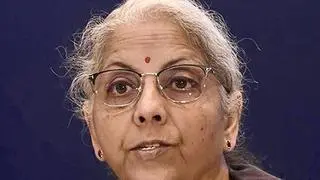
THE BIHAR Chief Minister, Mr Nitish Kumar.

The stock of a Chief Minister is measured by the number of visits to his State by high-profile dignitaries from the Central Government. By that reckoning, Maharashtra is possibly at the top; be it the unprecedented rain leading to floods in Mumbai or the farmer suicides in the Vidarbha region or the handing over living quarters to the women beedi workers in Solapur, the Prime Minister has been a regular visitor to the State.

By this parameter, the record of Mr Nitish Kumar, who has completed ten months as the Chief Minister of Bihar, is wanting. Even though a drought devastated Bihar, the Prime Minister did not visit the State. Mr Nitish Kumar did ensure the visit of the President and the Vice-President. While these visits are a matter of prestige and honour, in terms of tangible resource devolution, they are of little significance. However, Mr Nitish Kumar literally accomplished a `political coup' by ensuring the visit of the Finance Minister, Mr P. Chidambaram, to Patna. The visit was important because not only has the Minister the ability to set the economic agenda, but can also implement it. Thus, the visit should not be measured in terms of the financial package announced, but in terms of its symbolic significance. Is economically resurgent India looking for a turn around in Bihar in the near future?

Three key aspects

Mr Chidambaram's visit should be assessed along three parameters. First, he warned the commercial banks to improve their performance and internal governance. If the target, set by Mr Chidambaram, to devolve an additional Rs 10,000 crore in the agricultural credit plan to the State in the current financial year is achieved, it will bridge significantly the mismatch between the savings and the investment rate in the resource-starved State. That 37 blocks of the State are still outside its pale, 800 branches are manned by only one officer, and 700 branches have not devolved any credit in their area reflect a dismal state of performance of the banks.

It is ironic that Bihar generates a sizeable deposit of Rs 46,134 crore, but Rs 31,326 crore of it is transferred from the State to rest of India through the machinery of banks. If Mr Chidambaram is able to provide the promised good performance of the Centre's own institutions, it will be of great service to Bihar.

Second, Mr Chidambaram's chiding of the poor quality of governance in the State should not be ignored. The image of Bihar as the most corrupt State continues.. The fiction of the Appleby Report of the 1950s about Bihar's good governance was created in spite of the fact that nowhere in it was there any mention of good governance in Bihar. Unless the systematic siphoning off of resources is stopped, Bihar cannot hope for better governance.

Historical disadvantage

Finally, the visit of Mr Chidambaram will ensure that he takes cognisance of the historically disabling factors that are inhibiting growth in some of the peripheral regions of India. Bihar has historical disadvantages. Not only did the colonial rulers leave the indigenous artisans and traders devastated, their tenurial system of `permanent settlement' spelt doom for the State in the matter of generation and appropriation of surplus and, in turn, investment and per capita expenditure.

Long before Independence, in 1930, the Memorandum for the Indian Statutory Commission on the Working of the Reforms by Bihar and Orissa indicated that expenditure in administration, education, health and police was the lowest in the country. It identified the `permanent settlement' to be the main cause of limited resource generation and limited administrative expenditure. The `permanent settlement' also stood in the way of regular survey and settlement operations, as in the Ryotwari areas, which form the `sun rise' States.

There is historical absence of governance at the lowest levels of the State, where social arbitration is still being done by the feudal lords or by the mafia. In areas with militant agrarian struggles, this role is also played by radical organisations.

The post-Independence development strategies did not make any serious effort to reverse this disadvantage. The vivisection of the State, in November 2000, into Bihar and Jharkhand further crippled the public financial and economic structure. Since Independence, not only has Bihar the lowest per-capita Plan expenditure, but also the lowest non-Plan expenditure.

In an interactive session with the developmental specialists and agencies, Mr Chidambaram mentioned that there is a substantial jump in the Twelfth Finance Commission award for Bihar. But even after that, the per-capita allocation for the State remains the lowest, though the Finance Commission grants are expected to be `equalisation' grants. It is not often realised that the quality of governance in a State where the capacity for internal resource generation is limited the Finance Commission grant is extremely important.

The whole edifice of the State and its civil service is kept smoothly functioning with the non-Plan grant of the Finance Commission. Even for meeting the matching grant of the Planning Commission or servicing the debt, the Finance Commission award is necessary.

The way ahead

If the writ of the state has to be made all pervasive in Bihar, not only does the non-Plan expenditure need to be increased in administration, but some parts of the state structure also has to be dismantled.

If fiscal management is followed by debt reduction, as exhorted by Mr Chidambaram, the proportion of third and fourth grade employees, who do not contribute to productive governance, should not only be reduced, even in the matter of pay structure, but also rationalised.

Incidentally, the annual per-capita expenditure on State government employees is the highest in the country (Rs 1.5 lakh); the national average is Rs 82,000.

In the absence of such understanding about historical disability, one will not be able to appreciate the reasons for debt accumulation over the years. If the government of I. K. Gujral could write off the debt of Punjab, one of the richest States, why cannot this favour be extended to Bihar as well?

In any case, without expanding the market and strengthening the entrepreneurial base, resources cannot be devolved through market related route.

(The author is Member-Secretary of the Patna-based Asian Development Research Institute.)

More Stories on : Economy | Other States

Article E-Mail :: Comment :: Syndication :: Printer Friendly Page


Stories in this Section
Iniquitous enclaves


To achieve a turnaround in Bihar
Crude oil: Super-spike ahead?
Corporate culture calls for common code
`Deal'ing with the customer
FRBM rules
Funds' planning


The Hindu Group: Home | About Us | Copyright | Archives | Contacts | Subscription
Group Sites: The Hindu | The Hindu ePaper | Business Line | Business Line ePaper | Sportstar | Frontline | The Hindu eBooks | The Hindu Images | Home |

Copyright © 2006, The Hindu Business Line. Republication or redissemination of the contents of this screen are expressly prohibited without the written consent of The Hindu Business Line