Financial Daily from THE HINDU group of publications
Thursday, May 15, 2003

Catalyst
Features
Stocks
Port Info
Archives

Group Sites

Catalyst - Interview
Variety - Radio/TV


`Mirchi is the only brand in the radio space'

Sriram Srinivasan

"Mirchi would eventually look at having a presence in every nook and corner of this country, which means going into the smaller towns."


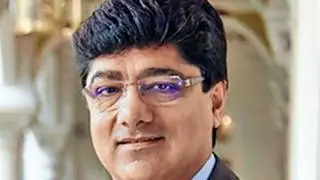
Prashant Panday, COO

A sense of relief was discernible in G. Sharath Chandra's voice as he confirmed last Monday over telephone Radio Mirchi's launch in Chennai. The feeling was understandable considering that the Station Head of Mirchi in Chennai had been `broadcast-ready' for quite a while and waiting for the co-location process to get completed, which it did on May 5 after delays and more delays, to get the channel on air.

The launch — which adds one more channel to Mirchi's network covering Mumbai, Indore, Ahmedabad, Pune, Delhi and Kolkata — has come at a time when the private FM players have incurred losses of nearly Rs 120 crore from the first year of operations, nearly two-thirds of which has been given to the Government as licence fee. Mirchi's own record has been mixed. According to news reports, while it has posted the highest turnover of Rs 21 crore among private players, it has also posted the highest losses at more than twice that. What is Mirchi's stand on the issue and the FM radio market? Catalyst asked its Chief Operating Officer, Prashant Panday, who flew down from Mumbai for the launch.

How has the private FM radio market developed in the past one-and-a-half to two years?

There are two ways of looking at it. One is how it has developed versus what it was. I think the growth has been very good. In Mumbai, for instance, the radio industry has grown five times over (from an estimated Rs 5-6 crore to Rs 25-30 crore). However, the other way of looking at it is that the industry has not grown as fast as one would have liked it to grow. For instance, to achieve break-even, the industry would have to do something in the region of Rs 90-100 crore. We are still a long way off from that number. The key question is whether the industry, this year, will again grow by at least two to three times. If that happens, then the industry will grow to Rs 50-75 crore. That is what we are really waiting for. So, it's a mixed bag, really.

What is your outlook for Radio Mirchi this year?

We are definitely optimistic. Advertisers' spends are increasing. Clients and agencies have started including it (the channel) in media plans. Also, what is important is that the `burns' are increasing. The spending per day is increasing. Earlier, we used to get Rs 10-15 lakh and it would last three months. Now, we have clients who burn Rs 15 lakh in 15 days. I think the launch of Delhi, Kolkata and Chennai will really help in a major way. We have already got 15 clients who are across all stations.

What are the challenges facing the industry as a whole, and thus your company?

Two levels of challenges: one, on the listener's side; two, on the advertiser's side.

On the listener's side, clearly, the challenge is to increase the penetration of FM. Today, we find that about 65 per cent of the population in Mumbai has access to FM. That percentage, logically, should go up to about 80 or 90. If you look at that, it's a large number — a 30 per cent increase means 45 lakh more people have to be covered by radio. But growth is also easy because it is an economy model. Buying a radio is not difficult. So, unlike television, which took 10 years to hit 80 per cent C&S (cable and satellite) levels, radio in the next six months to one year will hit that level.

The other challenge is to increase the time spent listening. That will only happen when clients have access to different programming formats. So, you have one channel which plays new music, one which plays retro music, one which plays English, and that means a wide variety. When that happens, you can be sure that the time spent listening will go up.

On the advertisers' side, the main challenge is convincing advertisers that radio works. And again, the first year has been remarkably good because the repeat advertising rate has been high. We have close to about 70 per cent of the clients who have advertised yet again. This year is critical because some key advertisers who have not advertised on radio will hopefully take the plunge and some who tested the waters last year will increase their spends. That's the challenge. If that happens, the industry will take off. If it doesn't happen, then the industry will suffer for some more years.

Private FM players have time and again spoken out against the huge licence fee that they have got to pay to the Government. What are your views on that?

It's a huge problem for the industry. It, of course, puts the radio companies at a huge disadvantage. But more importantly, it is putting the listener at a big disadvantage. In Mumbai, you will find that four channels out of the five sound almost the same. And only one channel has got a little mix of English in it. This happens because, if you want to experiment by playing, say, 100 per cent English music — as cities like Mumbai and Chennai should logically have a channel which plays 100 per cent English music — the number of people listening to it will be small. Therefore, your advertising rates, and thus the revenues, will be small. If the revenues are small, the cost should also be small, or else you won't be profitable. But the problem is that the licence fee is fixed. Which is why everybody has moved into mainstream Hindi music. Likewise, in Delhi, everybody is playing the same music.

Therefore, I think it would make sense if something is done to restructure the licence fee regime. The radio group is already working on it. The first indications are that the Government is supportive of it. But there's a long way to go before anything concrete happens.

When you talk of restructuring the licence fee regime, are you referring to a revenue-sharing arrangement?

The industry has mooted different formulae. One of them, of course, is revenue sharing. That has been in the air for some time now. But we have no definitive response yet from the Government.

You had said earlier that in centres such as Mumbai almost all channels sound the same. In such a situation, what do you think differentiates your channel from the rest?

In Mumbai, even on April 22, when the last research was done, we had close to 50 per cent of the city listening to Mirchi and the other six channels took the remaining 50 per cent. This is because the brand is very strong — i.e. Mirchi as a brand name and the way the brand name has been developed. I often give the example of the salt business. If you go to buy salt in the market, you will find hundreds of products and packages, but there will be only one or two brand names. And the bulk of the people will buy that brand. Remember, people never buy products, people only buy brands. So, Mirchi is the only brand in the radio space. The second thing is that we were the first ones to come into Hindi music and the first ones to come into contemporary Hindi music. So, for the consumer, it is always Mirchi that plays hot Hindi music; the others are followers. A me-too will always remain a distant second.

Third, we have a proprietary research technique called Moods Analysis and Mapping. According to the technology, the same song has different values at different times. For instance, if I am playing you a song at 7 a.m., you may hate it, but you may love the same song at 7 p.m. And that depends upon your mood. This technology has given us good scheduling expertise.

What is radio's future in India?

Radio in India is destined to grow. There are just no two opinions about it. With the fact that India is completely integrated with the rest of the world now, whatever happens worldwide happens in India too. Worldwide, the radio advertising revenues would be seven to 10 per cent of total advertising revenues. I don't see the situation being different in India. If anything, radio in India should grow much more than the worldwide number because the passion for music is more here than in most countries.

Would future growth in revenues come about through an increase in the volumes of advertising or the rates?

Both. I think we have had about 1,000 advertisers so far. But we believe we can easily have about 5,000-7,000 advertisers. The volume of advertisements should certainly increase. And the moment the volume of advertisements increases, the rates will definitely stiffen. We are unviable at this point of time. So, the radio industry is digging deep into its pocket to survive. So, the rates have to go up; the volumes have to go up. Otherwise, people will close down.

There were reports that Mirchi plans to expand its network. What will be the focus areas?

We are interested in some of the bigger cities which are not in our portfolio now — for instance, Bangalore, Hyderabad, definitely Coimbatore, Chandigarh, Ludhiana, Lucknow and Kanpur. That will still take us to about 15 frequencies. But this country can have 5,000 radio stations. Mirchi would eventually look at having a presence in every nook and corner of this country, which means going into the smaller towns.

How is the work on co-location in Mumbai progressing?

It has been very slow, to be very honest. The radio industry in Mumbai has been focusing on generating at least the first streams of revenue. That's where most of the attention has been. There is a deadline which the Government has set for us for moving to a common tower, but that deadline is not being adhered to at this point of time. I don't see that deadline being met. And the reason is very simple. The first year (of private radio operations) has just ended in Mumbai. This is when it becomes clear as to who is staying back and who is not staying back in the business. When this becomes clear, the work on moving to the common tower will start. So, it may get delayed but it will happen eventually.

Article E-Mail :: Comment :: Syndication

Stories in this Section
Why do people innovate?


`Mirchi is the only brand in the radio space'
Clued in to Crossword
A lifeline for Lifebuoy?
Cutting through celebrity clutter
PRand-building
A basket CAS
Hardsell
Cool 'n fragrant
Scented shave
Mobile fun
Fan club
Smoke-free
Summer looks
Sun shade
Quiet cooling


The Hindu Group: Home | About Us | Copyright | Archives | Contacts | Subscription
Group Sites: The Hindu | Business Line | The Sportstar | Frontline | The Hindu eBooks | Home |

Copyright © 2003, The Hindu Business Line. Republication or redissemination of the contents of this screen are expressly prohibited without the written consent of The Hindu Business Line