![]() Financial Daily from THE HINDU group of publications Monday, May 24, 2004 |
|
|
|
|
|
eWorld
-
Hardware Marketing - Trends This slump is good Raja Simhan T.E.
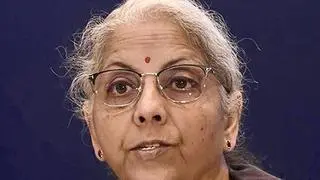
SAROJA, a middle-class housewife in Chennai, had to decide between replacing her 10-year-old television set and buying a personal computer for her wedding anniversary. She made her choice easily: she plumped for the PC. For one thing, with a PC, she could keep in touch with her two children studying in the US. For another, she could use the computer to keep her grandchildren at home in Chennai usefully occupied. Also, loading a compact disk with nursery rhymes and playing an MP3 disk are now tasks that come easily to grandmothers like Saroja.Today, the PC is no longer something for the elite. It has become a necessity for large sections of people, especially in the urban areas. Moreover, attractive finance schemes offered by banks and financial institutions also encourage consumers to buy PCs. Concurrently, the cost of a PC has also dropped between 10 per cent and 15 per cent in the last 12 months, especially in the last four months after the Government announced a reduction in the excise duty on PC components, from 16 per cent to 8 per cent, and subsequently abolished the same on microprocessors, hard disk drives, floppy-disk drives and CD-ROM drives. These factors are expected to boost PC sales further. There is buoyancy in the market, especially among the retail segment, also called the SoHo (Small Office Home Office) segment, says P. Krishnakumar, Country Manager, Consumer Desktops, HP India Sales Private Ltd. PC sales in India totalled 809,065 units in the third quarter ended December, up 87 per cent from a year earlier. This year, full-year sales are set to cross three million units. Sales were up 31.3 per cent from the 616,346 PCs sold in the July-September quarter, according to MAIT (Manufacturers' Association of Information Technology), which represents the computer hardware industry. Its quarterly survey showed increased buying by industries such as telecom and banking, and non-traditional sectors such as education and retail had boosted demand. With the PC coming with a price tag of less than Rs 20,000, it's definitely on the purchase list of customers, says an official from Intel. For instance, an Intel Celeron Processor 2.2 GHz-based PC, with Intel chipset board, 128 mega byte DDR RAM (computer memory, 40 Giga byte hard drive disk, 15 inch colour monitor, a mouse and speakers could cost about Rs17,500 with any genuine Intel dealer (GID), he says. At a slightly higher version comprising an Intel Pentium 4 Processor 2.4 GHz (with 1MB cache), a PC costs about Rs 20,000 from a GID, he says. The system, however, does not include the cost of an operating system, be it Microsoft or Linux. It is a similar story with PC manufacturer Hewlett-Packard. About a year ago, the cost of an entry-level HP personal computer with a configuration of AMD Athlon XP 2000+ (1.67 GHz) processor, 128 DDR RAM, 40 HDD, 48XCD, a 15 inch monitor and a modem was Rs 31,690. In March 2004, the cost of a PC with this configuration, camd down to Rs 21,990. Similarly, an HP personal computer with a Pentium 4 Intel processor (2.6 GHz) last year cost Rs 37,190, while the price came down to Rs 29,990 in March this year, says Krishnakumar of HP India. According to Krishnakumar, with branded manufacturers reducing prices significantly, the gap between branded and non-branded PCs will narrow down in a couple of years. Consumers today are not as such lowering their budget and moving towards assembled PCs. Instead they want quality products and are moving towards branded versions, he says. More PC assemblers are becoming HP partners and selling the company's branded machines. The company is present in 228 Indian cities with 580 partners. By year-end, it will be in 270 cities and is aiming to reach about 700 partners, he says. Among the main players in India's PC market are HP, IBM Corp and HCL Infosystems. But the industry is still dominated by unbranded, cheap PCs made by assemblers working out of tiny shops across the country. The MAIT survey showed that small regional brands and unbranded systems accounted for 55 per cent of PC sales, Indian brands for 15 per cent and multinational brands made up 30 per cent. MAIT's Executive Director, Vinnie Mehta, says the industry's prospects have been boosted by the halving of excise duty on computers to 8 per cent. Also, the impact of the move to abolish excise duty on microprocessors, hard disk drives, floppy-disk drives and CD-ROM drives will be seen in the fourth quarter and in the financial year starting in April, Mehta says. S.V. Sriram, President and Chief Operations Officer of Accel ICIM, a Chennai-based IT company, says the reduction in PC prices has expanded the market (in the last three months) in the banking, financial services and insurance, telecom, and government sectors. Besides, the home segment has also increased its purchases, which were down in 2002 - 03. PC configuration changes have been marginal, except for processor speeds and memory requirement going up, he says. And while the unorganised sector still dominates, the price difference between branded and unbranded PCs ought to keep coming down, thanks to government moves to cut duty, he says. Raj Saraf, Chairman and Managing Director of Zenith Computers Ltd, a domestic PC manufacturer, says the laptop market has gone up without hurting the desktop business and that shows the increasing demand for PCs in India. According to MAIT, the notebook market in the December quarter witnessed a growth of 105 per cent against the previous quarter, scaling 29,000 units. Picture by G.R.N. Somashekar
Article E-Mail :: Comment :: Syndication :: Printer Friendly Page
|
Stories in this Section |
|
The Hindu Group: Home | About Us | Copyright | Archives | Contacts | Subscription Group Sites: The Hindu | Business Line | The Sportstar | Frontline | The Hindu eBooks | Home |
Copyright © 2004, The
Hindu Business Line. Republication or redissemination of the contents of
this screen are expressly prohibited without the written consent of
The Hindu Business Line
|