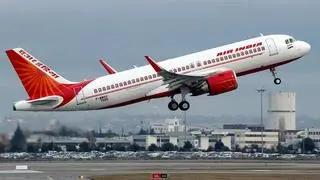
Was last Friday’s drama at the international airport here all about a ‘ceased’ flight and a hijack that was never attempted?
The fact that the doors of the aircraft remained open during the fiasco meant that the flight had ‘ceased to exist’ and hence a case of attempt to hijack could not be made out, says Jacob K. Philip, editor of Indian Aviation News.
Since there was no flight, there was no case of a hijack either, he told Business Line.
HOW IT IS DEFINED
The Anti-Hijacking Act, 1982 defines a hijack (chapter II-3) thus: “Whoever on board an aircraft in flight, unlawfully, by force or threat of force or by any other form of intimidation, seizes or exercises control of that aircraft, commits the offence of hijacking of such aircraft.”
That means, only an aircraft in flight can be hijacked, says Philip.
The Act goes on to define an ‘aircraft in flight’: “An aircraft shall be deemed to be in flight at any time from the moment when all its external doors are closed following embarkation until the moment when any such door is opened for disembarkation.”
WRONG CODE
Rupali Waghmare, the pilot-in-command (PIC) of Air India Express flight 4422 from Abu Dhabi to Kochi, had radioed the air traffic control about a ‘hijack-like situation.’
The Boeing 737-800 had been diverted here because of poor visibility over Kochi.
Having exceeded her flight duty time soon after landing here, the PIC reportedly informed passengers that they would have to travel to Kochi on their own.
The ensuing fracas resulted in the pilot reporting the ‘hijack-like situation,’ though the transponder button she had pressed was 7700 indicating an ‘emergency’.
The air traffic control had no choice but to initiate anti-hijack drill (directive 36.7.2 Operations Manual of AICL (Air India Charters Ltd, Issue 1, 24.04.2012), even though they could see from the tower that the aircraft doors were open.


Comments:
Dear Sir,
The article is flawed and based on wrong assumptions. Let me give you the clause on which the case is strong.
ICAO Doc.9713 defines "Unlawful Interference":
FORCIBLE INTRUSION ON BOARD AN AIRCRAFT, AT AN AIRPORT, OR ON THE PREMISES OF AN AERONAUTICAL FACILITY
COMMUNICATION OF FALSE INFORMATION SUCH AS TO JEOPARDISE THE SAFETY OF AN AIRCRAFT IN FLIGHT OR ON THE GROUND, OF THE PASSENGERS, GROUND PERSONNEL OR THE GENERAL PUBLIC, AT AN AIRPORT OR ON THE PREMISES OF A CIVIL AVIATION FACILITY
There is also an ICAO Doc. for Legal provisions for action against "Unlawful interference" and also for 'Unruly passengers".
These are restricted Docs. and will not be available in the public domain. Air India Express has filed the charges based on those Docs and the passengers can be charged
According to Indian Aviation Rules, any unauthorised/forced intrusion into the cockpit is an offence, plain and simple, no matter what the state of mind of the offender. It invites the appropriate punitive action.
Wonder how the article is flawed and what are the 'wrong assumptions. The article only said it was not a case of hijacking as per the Hijack Act. Can Capt. Ranganathan still say that it was a hijack attempt? These are restricted Docs. and will not be available in the public domain. Please don't make us laugh, Captain ! No document of ICAO is restricted. Please remember that it is International Civil Aviation Organisation.
Please Email the Editor