![]() Financial Daily from THE HINDU group of publications Friday, Dec 30, 2005 |
|
|
|
|
|
|
|
Life
-
Health Variety - People Akram's unlimited overs Abhinav Ramnarayan
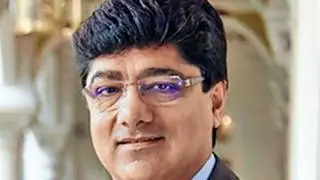
He has been described as the one with God's own left arm, the finest fast bowler of his time, a playboy and other epithets kind and unkind... but when he walked in to talk about his experience in fighting diabetes, the only word that came to mind was charming. From the broad smile that he bestowed indiscriminately on everyone in the room, to his self-effacing "Hi, I'm Wasim Akram", he exudes charm. Akram's struggle to remain a competitive cricketer despite being diagnosed with diabetes at the peak of his career has now entered the realm of cricketing lore. "When I was told I had diabetes I was shocked, and I told the doc, `I thought only people who were fat and sat around all day got diabetes'," Akram recalls. "But I was wrong, and it isn't genetic either." Back in the summer of 1997, Akram experienced sudden loss of weight, weakness and sweet cravings overtaking him from time to time. The diagnosis left him in depression for a month. But Akram decided to fight back and went on a strict fitness regimen working out at the gym, getting his insulin shots on time and, when out in the field, kept chocolates with the umpire and on the boundary line to keep cravings in check. "The problem with places like India and Pakistan is that the doctors don't take time to explain the disease to the patients," he said. "The best way to deal with this condition is to understand it as best you can," take control of your life, and monitor sugar levels regularly. His performance on field remained unaffected by his diabetic condition. He took 400 wickets each in Tests and one-dayers, and went on to hit the 500 mark in ODIs, the first bowler to do so. He captained Pakistan at the 1999 World Cup and guided the team to the finals, playing some fabulous cricket along the way. It was a pity that they crumbled against Australia in the final, but the year 1999 is important for Pakistani cricket for yet another reason the first time that country toured India for a Test series in eleven years. The glorious opening match that seesawed both ways alarmingly often, leaving the crowd gasping for breath, was one that Akram remembers fondly. "To this day, Chennai is my favourite city in India," he says, describing the standing ovation the Pakistan team got when it snatched the game from under India's nose on the fourth day. In fact, in the build-up to the series, when everyone worried about security and politics, and the possibility of riots, Akram remained confident that everything would run smoothly in India. And it sure did. In recent years, ever since he took up commentary with ESPN-Star Sports, he is more and more visible to the Indian public, and was even reprimanded back home for giving Indian left-arm pacer Irfan Pathan, a player fresh out of his maiden Test series in Australia, a few pointers. When asked about Pathan, he says simply, "He's got the talent." And now Akram is touring India, spreading awareness about diabetes, which he has personally conquered. "There are many reasons why I do this. First of all, people see it as inspiration, they think if he can do it, so can I," he explains. "I want to break some myths, such as diabetics tire fast; that's nonsense. I never got tired." He also believes that people shouldn't hide the fact that they are diabetic. In fact, "I am Wasim Akram, and I am a diabetic", was how he introduced himself. Obviously, Akram doesn't lead by example on the cricket field alone. He also explained why he hadn't opened a hospital, like his mentor Imran Khan did. He prefers visiting hospitals and giving people hope; he wants to reach out to more people. Looking back, Akram burst on to the cricketing scene in the 1980s, stunning the world with his pace; in the 1990s groin injuries forced him to cut down on the pace and depend on wile and movement. On English pitches, he was all but unplayable, with occasions when the ball would swing in one direction, and move off the pitch in another. So much so that he and team-mate Waqar Younis were accused of ball tampering when they got the ball to reverse in the 1992 series against England. Today, of course, reverse swing has become an integral part of the game, but Akram has not forgotten the accusations when he and Younis pioneered the art; he reminded the world of this after reverse swing played a crucial role in helping England regain the Ashes earlier this year. Nevertheless, he had several successful seasons playing for Lancashire, eventually captaining the team. Star bowler Andrew Flintoff remembers Akram with much fondness in his recently released autobiography. And, finally, the inevitable question... Is Akram, like his mentor Imran Khan, likely to enter politics? "I won't say yes, and I won't say no," he replies. "See, I'm a politician already," he adds mischievously.
More Stories on : Health | People
Article E-Mail :: Comment :: Syndication :: Printer Friendly Page
|
Stories in this Section |
|
The Hindu Group: Home | About Us | Copyright | Archives | Contacts | Subscription Group Sites: The Hindu | Business Line | The Sportstar | Frontline | The Hindu eBooks | The Hindu Images | Home |
Copyright © 2005, The
Hindu Business Line. Republication or redissemination of the contents of
this screen are expressly prohibited without the written consent of
The Hindu Business Line
|