Financial Daily from THE HINDU group of publications
Friday, Dec 30, 2005


Life
Features
Stocks
Shipping
Archives
Google

Group Sites

Life - Health


Safekeeping stem cells

Rasheeda Bhagat

S. Abhaya Kumar set up the country's first private cord-blood bank in Chennai and hopes to make it a one-stop shop in the fight against diseases like cancer, diabetes and even arthritis.

He likes to call himself a "serial entrepreneur", taking on this tag when you ask him why the need for another company when Shasun Drugs and Chemicals that he started in 1976 was doing so well, having become a $ 100-million company.

Taking a cue from classmate M.M. Murugappan of the Murugappa group, in 2003 S. Abhaya Kumar, Shasun's founder and Joint Managing Director, "decided to hand over the company to professionals". But even before that Jagdish Seth, a director on the Shasun board, and also a board member of Cryocell International, USA, a pioneer in cord blood banking had kindled his interest on cord blood and the invaluable contribution it could make in treating dreaded diseases like cancer.

"We'd been talking about it for a few years but then Shasun was a family run business and with high-profile growth happening in the company in 2002, I could not step out," he says. But once the professional managers came, in 2004 he looked at new avenues. He was keen to focus on a non-chemical area and zeroed in on bio-technology and animation. When in Hollywood in April 2004 on animation-related work, he went to Tampa in Florida, to visit Cryocell, "the first company to start corporate banking in stem cells." Interestingly, at that time his daughter-in-law was pregnant, and with the baby due in November, he had to take a quick decision. A month later he decided to start in Chennai LifeCell, India's first private cord blood bank, where he is the Vice Chairman and CEO and R. Thiagarajan of the Shriram Group, the Chairman.

It is with a smile he recalls that as a chemical engineer who did not want to follow in the footsteps of his trader/financier father, he started Shasun with his family putting in Rs 5 lakh. "This time we put in Rs 5 crore of a total project cost of Rs 15 crore!"

With his grandchild expected in November, it was a race against time to get through the drug controller procedures and approvals, but when grandson Araham was delivered at the Apollo Hospital on Diwali day, his mother became the first client at the LifeCell cord blood bank in Chennai.

A year later, the bank has over 1,000 blood cell samples, tucked away safely to be recalled in the future for treatment of chronic diseases of blood-relatives, provided the HLA (human leucocytes antigen) matches.

The procedure is simple enough once you have enrolled, paying an initial fee of Rs 27,000; a kit is given to you and when the newborn's umbilical cord is cut, the blood is collected, stored in the kit and sent to the Bank — a 21,000 sq ft state-of-the-art stem cell processing and storing facility in Chennai. It has a capacity to store one lakh samples and the annual fee for storing a sample is Rs 2,900.

On the steep cost Kumar says, "We are the cheapest in the world without compromising on quality. The equipment and facilities in our lab are of international standards; we've not cut corners anywhere."

He concedes that against an investment of Rs 15 crore, a mere 1,000 clients means a few more years before the new company, which plans an IPO in 2008, breaks even. But then he is in this for the long haul. Getting Shasun on track was difficult and there were many challenges. "I was a first generation entrepreneur, with no management degree or industry experience. The first six months were really tough but in two years the entire scenario changed."

He is sure that at LifeCell too profits will come, but has decided not to hardsell. "We don't want to push this product with doctors for fear of ethical compromises in pressurising clients to take a decision. We'd rather educate doctors and couples and do presentations at home for the family."

It is interesting how decisions are made. "In Delhi it is invariably the mother-in-law who decides, in Mumbai there are cases where the wife decides and the husband goes along with it. In Kolkata and Chennai, the parents of couples tend to get involved. But in Bangalore it is clearly the couples who decide, without anyone's involvement," says Kumar.

Expectedly, families with a history of cancer or other chronic diseases where stem cells promise hope of a cure are more likely to enrol and discounts are given in such cases.

For poor patients, the company has announced free storage for five deposits a year each from the Adyar Cancer Institute and another hospital.

On LifeCell's expansion plans Kumar says they have permission to expand to SAARC countries, but don't intend putting up processing labs there.

"But we've had clients from Pakistan and Sri Lanka; the babies are delivered there and the cord blood is brought here in the kits we supply." Their Malaysia operations should be on by June 2006 and testing facilities in Dubai by 2007. He thinks this business will have competition but not for two years. "But there is room for new people; in the US there are over 20 such banks."

On ethical issues Kumar says these "arise only in embryonic stem cells; we just have to ensure that the parents are counselled properly, and take consent for testing the mother's blood for infectious diseases like HIV." Of the 1,000 samples, not a single mother tested HIV positive, though two blood samples tested positive for infectious diseases. Coming to the crucial issue of a successful transplant — LifeCell is setting up a transplant centre in collaboration with the Ramachandra Medical College Hospital in Chennai by May 2006 — there was one recall of a sample but the transplant failed because there was no HLA match. If there is a cent per cent HLA match rejection rate is much less. "But sometimes even when there is no HLA match doctors take a chance, as they did in this case because the leukaemia was terminal." The transplant itself is a simple procedure akin to blood transfusion.

Globally over 6,000 stem cell transplants have been done. "Once we have our own transplant centre, there can be increased application of stem cells, and demand for research and clinical trials will zoom."

His team is gearing up for demand from global players who'd like to conduct the trials in India on cost considerations and availability of subjects. "We'd like to bring here the technology that has been established on mice models and develop an appropriate application therapy for humans. That will not only be a big income stream but bring in intellectual property as well," says Kumar.

The protocol is already in place for starting a clinical trial on a type of rheumatoid arthritis for 20 people in May 2006. In this disorder the leg muscles get inadequate blood supply and walking becomes impossible.

This will be followed by trials on spinal cord injury and stroke. LifeCell has applied for licence for a public cord blood bank with storage for at least 1,000 samples available for third party use at a price. That will necessarily have to be unrelated transplants but informed consent for storing the stem cells will be taken from the parents.

On the high cost, Kumar says storage costs will come down with volume and increase in usage. "Our target for 2006-07 is 15,000, but for that more awareness has to be created." He is also excited about the immense possibilities in this field. "A new application theory that is getting popular is suspending the stem cells in a particular chemical and then injecting them. This breaks the brain barrier cells that don't allow the penetration of the stem cells. The result is better engraftment of the stem cells on to the affected site, helping faster recovery with a smaller dose. Right now stem blood cells can be used only once; with this new technology one sample can be used five times."

He adds that ultimately LifeCell's ambition is to "cover the entire gamut of stem cell scenario... as a therapy for diabetes, cardiac problems etc, and become a one-stop shop."

His vision for the company?

"To make it a Rs 1,000-crore company by 2012; its market valuation is already around Rs 100 crore."

Response may be sent to rasheeda@thehindu.co.in

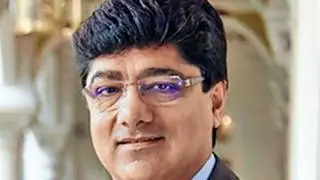
Picture by Bijoy Ghosh

More Stories on : Health

Article E-Mail :: Comment :: Syndication :: Printer Friendly Page


Stories in this Section
Of shrimps and squids...


Akram's unlimited overs
Safekeeping stem cells
Mediocre at best
Silvery splash
Making silence heard
Showcasing Asia
The storyteller
Watch this space


The Hindu Group: Home | About Us | Copyright | Archives | Contacts | Subscription
Group Sites: The Hindu | Business Line | The Sportstar | Frontline | The Hindu eBooks | The Hindu Images | Home |

Copyright © 2005, The Hindu Business Line. Republication or redissemination of the contents of this screen are expressly prohibited without the written consent of The Hindu Business Line