


 Comments
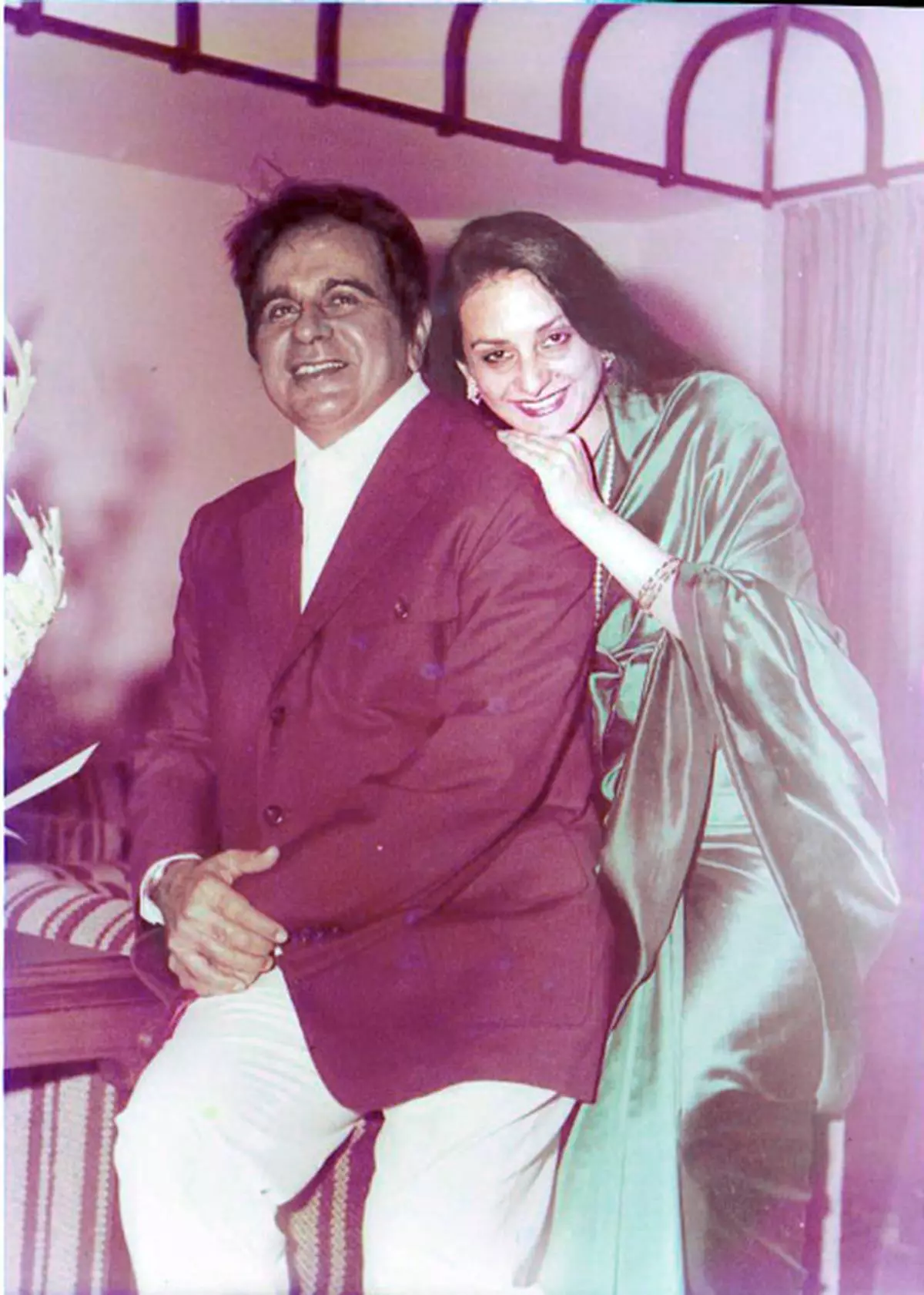
I was barely seven or eight when I landed up in Bombay for a three-week holiday in the late 1950s. Hosted by a very indulgent fiancé of my sister, my first request to him was: “Can we watch Azaad ?” The film was already a few years old and playing in a theatre in Dadar, then considered a long distance from Mohammed Ali Road. But we made it to the film, bought tickets in the black market, and with stars in my eyes I watched India’s greatest ever actor, deliver with a swagger: “ Ameero ko lootneywala, aur garibo ko bachaneywala, mera naam hei Azaad !”
As the versatile actor turns 90 today, the mind and heart are flooded with images of his incredible acting career spanning over six decades. The tantrum I threw to watch Mughal-e-Azam on the first day. My eldest brother and his friends had limited tickets, but the ruckus I created forced the grumbling sibling to take me, too. Yet another black market ticket and the magic of Shehzada Salim was all mine for the next three-odd hours. Dilip’s versatility, the sheer range of his acting prowess, the subtle nuances and shifting moods he so brilliantly enacted on the screen are stuff of legend. But his most invaluable gift as an actor was his dialogue delivery.
Incredible dialogue delivery
Whether it was a love-struck and defiant Salim asking Shehanshah Akbar (Prithviraj Kapoor) if he had begged for a son from the almighty “ is liye ki zindagi meri ho aur uske malik aap/Sansey meri ho aur dil ki dhadkano pe aapka kabza ho ?” (So that you would own my life and keep control over my heartbeats?); or Dilip in Bimal Roy’s Devdas delivering the immortal: “ Kaun kambakht hei jo bardasht karne ke liye peeta hei? Main tau peeta hoon ke bus saans le sakoo.” A trite English version. (I drink not to absorb my pain, but to be able to breathe.)
Beginning from the early 1960s and over the next two decades, I watched and rewatched Dilip starrers such as Kohinoor, Madhumati, Devdas, Aan, Milan, Naya Daur, Paigham, Yahudi, Leader and, of course, his in-house production Ganga Jumna with increasing awe, and a thumping, besotted heart.
Select Talkies, in one of the most crowded areas of Madras, was the treasured theatre showing old Hindi films. Jabbar, our driver, would drive us there muttering under his breath about the “third-rate theatre.” He frowned on the front-rowers who whistled robustly and wondered why the mom-dad duo would grant us permission in the first place!
More than tragedy king
To call Dilip a “tragedy king” would be extremely unfair to his colossal talent. Whether it is Kohinoor or Leader, he plays the role of a lover who has to unleash multiple pranks to win his lady-love, with such effortless ease that the acting seems like child’s play. But several of his co-actors, such as Vyjayantimala (his Dhanno in Ganga Jumna) and Nimmi, have described how hard Dilip always worked to get under the skin of the character he was portraying. The former recalled that in Naya Daur , before the famous truck- tonga race, Dilip was missing from the sets because he was riding a tonga around the studio! As she recounted this, I was humming Mohammed Rafi’s immortal “ Udey jab jab zulfein teri, kawariyo ka dil machhley”!
And then there were more unforgettable Dilip songs… Do sitaro ka zami par hei milan (Kohinoor) , Mukesh’s melting melody Suhana safar aur yeh mausam hasin and Tootey huey khwabon nei ( Madhumati ); Tu kahey agar jeevanbhar ( Andaaz ), Milte hi aankhein dil hua deewana kisi ka ( Milan ) and Maan mera ehsan, arey nadan ( Aan ).
In later years, as I read and watched his interviews, the full impact of the cerebral side of Dilip Kumar hit me. By the way, Youtube has some great footage on Dilip’s interviews, particularly one rendered in chaste and flawless Urdu — of which I have limited understanding I must admit — in Peshawar, his birthplace.
A cerebral star
Apart from sparkling intellect, what comes through is the humility of the man who ruled the silver screen for such long years as an unmatched giant. To one question about his “great acting skills” he said with his typical disarming smile that just melts the heart: “There is nothing like great actors or great acting; there is only good actors and good acting.” Ascribing his success to “good luck, perhaps, and a lot of hard work”, he said good performance came from “a good story, some solid substance to deal with, not mere shadows.” Add to this “voice control in dialogue delivery” and good presentation techniques, and “swallow the whole thing like a capsule or a pill and you have a good actor.”
If you consider that in those days there was no reference point for Hindi film stars to draw upon, then Dilip’s contribution to Indian cinema remains unparalleled. In the last few decades we’ve had so many Bollywood stars drawing from Dilip Kumar — a gesture here, a smile there, a flick of the hair lock — that you realise with a greater force how much of an original the man, who once ran an army canteen, was. And what debt generations of Indian cinema actors and moviegoers fans owe him.
What superstar, asks Dilip!
In that sense wasn’t he the original superstar, I ask him in an email interview. (Details on page 16).
The reply is vintage Yousuf saab! “I have not believed in stardom, much less the superstardom you are talking about. Yes, following the success of my films, the number of curious men and women, boys and girls waiting outside my bungalow kept increasing. Is that an indication that you are a star? Wherever I went I was besieged by people who wanted my signature on paper, photographs, and so on. Is that stardom?”
Dilip Kumar has been hailed for his being a “gentleman”. Prem Chopra has recalled how Dilip helped him improve his dialogue delivery, but only through “gentle suggestions.”
So how does he himself look at his six decades in Indian cinema? The awe, respect and admiration with which generations of actors and moviegoers look upon him?
“I look back at my career with a sense of gratitude and a feeling of surprise and wonder. I cannot help being intrigued that a little boy who sat listening to stories of valour with deep attention at the Kissa Kahani Bazaar in Peshawar has his own interesting story to tell now,” is his response.
On his 90th, let us wish him a continuing suhana safar.
Responses to rasheeda.bhagat@thehindu.co.in and blfeedback@thehindu.co.in
 Comments
COMMENT NOW


Comments
Comments have to be in English, and in full sentences. They cannot be abusive or personal. Please abide by our community guidelines for posting your comments.
We have migrated to a new commenting platform. If you are already a registered user of TheHindu Businessline and logged in, you may continue to engage with our articles. If you do not have an account please register and login to post comments. Users can access their older comments by logging into their accounts on Vuukle.