Business Daily from THE HINDU group of publications Friday, Nov 24, 2006 ePaper |
|
|
|
|
|
|
|
Opinion
-
Bio-tech & Genetics Agri-Biz & Commodities - Insight GM rice: Grains of disaster K. P. Prabhakaran Nair
AP issue
Second, the Andhra Pradesh Government refused to grant permission for the commercial cultivation of Bollgard II a follow-up of Bollgard I both supposedly the "bullet" against the dreaded cotton bollworm because many a farmer who cultivated Bollgard I, paying a high price of Rs 1,850 for 450 gm, burnt his fingers when the crop failed. On July 11, the Review Committee on Genetic Manipulation (RCGM), an arm of the Department of Biotechnology (DBT), granted permission to an MNC to conduct multi-location trials on GM rice. But the recent Supreme Court judgement on September 22, which said that the decisions of the Genetic Engineering Approval Committee (GEAC) should be examined by independent and competent experts lent proof to the fact that while much of India is ignorant of what is happening on the GM front, multinationals are quietly but vigorously attempting to gain a foothold in the Indian market with GM crops.
Single soil bacterium gene
Whether it is Bt cotton or Bt brinjal or, now, Bt rice, the common thread is the single Cry1Ac gene, an isolate from a soil bacterium Bacillus thurengiensis. It is often argued by proponents of GM crops that it is only a "continuation" of what has historically been done. Though a form of genetic engineering of food crops and animals has long been practised through the process of selective breeding, now India has taken a leap forward by incorporating genetic material from one species (a bacterium) into another (a plant) to give the recipient new traits. The proponents of the Bt rice may argue that since rice is a self-pollinated crop, genetic contamination is excluded. But genes can travel to related plants on their own. This is "Gene Flow".
Gene flow
In 1966, gene flow was discovered to be much more common than previously thought. The process of putting alien genes into plants and animals to bring out certain traits or confer resistance is, at best, an inexact science, with unpredictable consequences. Without careful study, plants with undesirable characteristics may be released into the ecosystem. And the recent evidence with Bt brinjal, where the precautionary measures stipulated by the DBT have not been strictly adhered to, is an added source of concern. It is claimed that GM crops will solve world food problems and eradicate hunger. But the reality is quite the opposite. If genetically engineered crops were aimed at feeding the hungry, the MNC involved would be developing seeds with such predictable characteristics as the ability to grow on sub-standard soils, plants capable of producing high-quality protein with increased per acre yield without the need for expensive machinery, chemicals, fertilisers and water, they would aim to favour small farmers over large ones, the seeds would be cheap and freely available without restrictive licensing, and they would be for crops that feed people, not animals.
Main crops
The main GM crops on offer are soybean, cotton, corn and canola and the two predominant traits are herbicide tolerance and insect resistance. Soybean is principally meant for animal feed while yellow corn is used for animal feed and for making high-fructose corn syrup. The fact is that two-thirds of the GM crops now available in the market or in the process of development, are designed specifically to increase the sale of pesticides produced by MNCs that are selling the GM seeds. The Bt rice episode has brought into sharp focus what is at stake for India. Take the example of Bt cotton. While the MNC involved in its promotion is selling it at a price unaffordable for a poor Indian farmer (Rs 1,850 for a 450 gm packet), it is being sold in China for a fraction of this price.
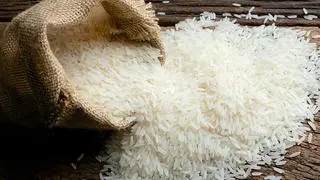
Second, and more important, unless India is vigilant, it stands to lose a very lucrative rice market abroad. The most recent example with GM rice "Liberty Link" 601 and 602 developed by Bayer Crop Science must be an eye-opener to India. For just six rogue grains in 10,000, the EU and even Russia stopped all rice imports from the US, and Bayer is being sued by farmers. World's biggest rice importer, Ebro Puleva has stopped trading in US grown rice with retail chains such as Tesco and Marks and Spencer following suit. India would be committing `hara-kiri' in its niche Basmati, a Rs 7,000-crore plus export market, if it makes the blunder of raising suspicions among the EU importer that Indian rice is contaminated with GM rice. That is one of the main lessons one must learn, if not anything else, in this "rice burning" issue. (The author, a former National Science Foundation Professor, Royal Society, Belgium, can be contacted at nair_kpp@yahoo.com)
More Stories on : Bio-tech & Genetics | Insight | Rice
Article E-Mail :: Comment :: Syndication :: Printer Friendly Page
|
Stories in this Section |
|
The Hindu Group: Home | About Us | Copyright | Archives | Contacts | Subscription Group Sites: The Hindu | The Hindu ePaper | Business Line | Business Line ePaper | Sportstar | Frontline | The Hindu eBooks | The Hindu Images | Home |
Copyright © 2006, The
Hindu Business Line. Republication or redissemination of the contents of
this screen are expressly prohibited without the written consent of
The Hindu Business Line
|