Business Daily from THE HINDU group of publications Saturday, Nov 03, 2007 ePaper | Mobile/PDA Version |
|
|
|
|
|
|
|
Opinion
-
Editorial Oil’s century
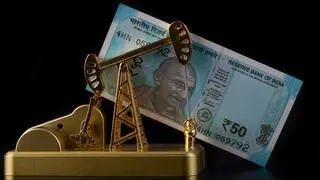
It was an unimaginable scenario back in 1999, when oil traded at $10 a barrel and several commentators, including The Economist, were talking of $5 a barrel as a realistic future price. Eight years hence, global oil prices now nudge $100 a barrel — ten times what prevailed in 1999. What an exhilarating run it has been for the commodity that literally fuels the world’s growth! Significantly, oil has become dearer despite producers pumping out more now. Global oil output today is higher by almost a third compared to the late 1990s. So what is driving oil prices higher? First, the growing demand-supply mismatch as consumption grows rapidly in countries such as China and India. The galloping demand from such high-growth economies is in addition to the steady consumption growth in developed countries. Supply, of course, is not keeping pace with the demand growth, leading to a major imbalance that is pushing prices upwards. Pronouncements that global oil production has already peaked only add fuel to the fire. Second, is the role played by speculative money flowing into oil futures contracts. Oil has always been a speculator’s dream commodity but what has changed now is that the other favourite — the dollar — is increasingly becoming unattractive as it weakens against every other currency. So a lot of speculative money is moving out of the dollar and into oil, as indeed into several other commodities. For oil producers, there is no incentive to increase output in the face of a weakening dollar; they would rather keep output low and prices high to protect their real earnings. Refinery outages, seasonal fluctuations in consumption, weather-related disruptions and political disturbances are other factors that influence prices. Consequently, there is a huge, artificial disconnect between the basic production cost of a barrel of oil, at under $10, and the market price at almost ten times that! With predictions that a barrel of oil will stay in the $80-100 band in the near future, how well is India prepared to handle the impact? The Government has been reluctant to increase retail prices. Oil bonds have come in handy to compensate the oil marketing companies for holding prices at these levels, but the Government is merely passing the burden to the future. Already, bonds worth Rs 40,000 crore have been issued in the last two years and the government is now planning to add another Rs 24,000 crore to that. Besides, the public sector oil companies are bearing a part of the subsidy, the effects of which are showing up in their financial performance. The appreciating rupee has cushioned the impact of higher oil prices but the government may, sooner than later, have to take the tough decision of passing on the higher price to consumers. The present policy prescription cannot work for long in the face of oil at $100 per barrel. Govt weighing options as crude oil prices near $100 Crude oil prices continue to rule high, pushing $88 The dynamics of crude oil More Stories on : Editorial | Petroleum
Article E-Mail :: Comment :: Syndication :: Printer Friendly Page
|
Stories in this Section |
|
The Hindu Group: Home | About Us | Copyright | Archives | Contacts | Subscription Group Sites: The Hindu | The Hindu ePaper | Business Line | Business Line ePaper | Sportstar | Frontline | The Hindu eBooks | The Hindu Images | Home |
Copyright © 2007, The
Hindu Business Line. Republication or redissemination of the contents of
this screen are expressly prohibited without the written consent of
The Hindu Business Line
|