Financial Daily from THE HINDU group of publications
Monday, Feb 06, 2006


News
Features
Stocks
Shipping
Archives
Google

Group Sites

Corporate - Interview


`Integrated energy policy to be finalised soon'

G. Srinivasan


Dr Kirit S. Parikh, Member (Energy), Planning Commission

New Delhi , Feb. 5

WITH the whopping rise in international crude prices, the country's dependence on imported crude has set off alarm over the sustainability and supply certainty of this fossil fuel, prompting the authorities to focus on integrated energy policy in general, and energy security in particular.

The Prime Minister, Dr Manmohan Singh, last year set up the Energy Coordination Committee (ECC) which he himself heads. The ECC, which meets periodically, is set to meet here on Monday to take stock of the power situation in the country.

Being a Member of the ECC as also the Chairman of the Report of the Expert Committee on Integrated Energy Policy (IEP), Dr Kirit S. Parikh, Member (Energy), Planning Commission, recently submitted a draft report on the issue. He shares his views with Business Line on the state of play on the energy front in the country as also the concerns and wide-ranging recommendations in his draft report.

Excerpts:

On the role of nuclear power: Nuclear power has a whole role to play. But we have to recognise that against the limited availability of resources, nuclear power is not going to be a major option in the short or medium-term unless our agreement with the United States results in an opening-up and that we can import a number of nuclear power plants. But, on our ability to build how many such plants, may be 10 or 15, the agreement does not clarify.

On the issue of integrated energy policy versus integrated Energy Ministry: I am sceptical about the idea of integrated Energy Ministry. In my view, if there is one Energy Minister, he may be found neglecting power or focusing too much on oil. But if you have separate Ministers they will develop each of their sectors. You need integration at the broad strategic level, particularly when you are going for a more market-determined competitive system. The best way to integrate these is through an appropriate set of prices. Once you set up relative prices in a reasonable structure, then the user would automatically choose the best strategy. Still, the Ministry has a lot of role to play in terms of controlling monopoly and in ensuring that competition takes place.

On the draft report: We have got a lot of comments. We shall look at them and finalise our report within the next 10 or 15 days and submit it to the Government. Once the government accepts the report, our idea is to go step-by-step in various areas and recommend specific plan of action so that it does not just remain a report and we have to see that it is implemented in the coming months.

On the report's suggestion to reduce requirement of energy as part of conservation: Reduction of requirement is always possible not in the sense of becoming an austere person renouncing things. A lot of energy waste takes place that could be avoided so that the same functions are fulfilled with less energy. For instance, you can save a lot of energy in industry, lighting and air-conditioning. Studies have shown that if we can move cargo long-distance traffic between Mumbai-Delhi by train than by truck, your diesel consumption goes down by a factor of 5. If trains are made to give the same quality of service as trucks, then there is no loss and you have saved energy. A unit of energy saved by a user is greater than a unit produced, as it saves on production losses as well as transport, transmission and distribution losses. Up to 25 per cent reduction in the country's energy intensity is possible over extant levels.

On power sector reforms: We are trying to get open access. We have taken too much time in finalising the Electricity Policy and Tariff Policy. Now that they have been notified, only the State Regulatory Commissions need to pronounce on the cross-subsidy surcharge.

Another element is reform of the SEBs and unless the aggregate technical and commercial (AT&C) losses of SEBs are brought down, nothing much will happen. Unless the SEBs are financially sound, no private investor would come in because they find that the only customer is bankrupt SEB.

Our guess is initially a limited number will come for open access and people will see how it is working.

PSUs may come as they are going well because of tripartite agreement, which provides for a payment guarantee. But that period is going to come to an end in 2006; not that the guarantees will end but they will have to start paying the loan (principal). The SEBs financial situation is going to worsen unless they improve their performance. This is a very critical time and if you increase the proportion of generation by the Central sector, the amount of money the States will give to the Centre would increase and you would have to soon start making a call on the State Governments' budget and then the States will find it difficult to continue with reforms.

But the things we have suggested in the IEP report can put the power sector on the right track, if implemented.

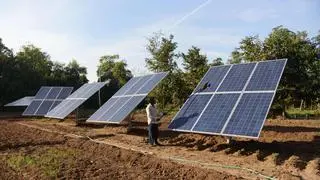
On non-conventional sources of energy: Currently, we have given nothing but incentives and they are in the form of subsidies, which would never work.

The best thing is to provide economically sensible incentives in a way that is linked to outcome.

For instance, solar or wind power, just giving money for setting up will not do. If you give money for feeding tariff that for every kilowatt hour you generate, I will give you Re 1 or 2 extra plus avoided cost and fix the tariff for wind power, it will be more efficient.

More Stories on : Interview

Article E-Mail :: Comment :: Syndication :: Printer Friendly Page


Stories in this Section
Ambani brothers clash again — Mukesh refutes Anil's charges on non-transfer of business control


Allotment of 4 demerged cos shares complete: RIL
Gas deal fuels Ambani spat
Man Industries to tap Dubai Intl Exchange with $50-m GDR issue
CAs can now take up audit work in US
Webasto Motherson shifts assembly line from Germany to India
Essar moves for SEZ refinery in Jamnagar — Second application in two weeks
Toyota workers to go on hunger strike
`Integrated energy policy to be finalised soon'
PMT venture seeks nod to end supply to GAIL


The Hindu Group: Home | About Us | Copyright | Archives | Contacts | Subscription
Group Sites: The Hindu | Business Line | Sportstar | Frontline | The Hindu eBooks | The Hindu Images | Home |

Copyright © 2006, The Hindu Business Line. Republication or redissemination of the contents of this screen are expressly prohibited without the written consent of The Hindu Business Line