Financial Daily from THE HINDU group of publications Thursday, Sep 30, 2004 |
||
|
|
||
|
Home Page
-
Economy Industry & Economy - Economy World economy to witness strongest year of growth: IMF outlook Sridhar Krishnaswami
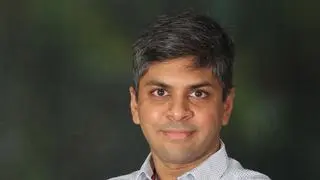
Dr Raghuram Rajan, Economic Counsellor and Director of IMF.
Washington , Sept. 29 IN its World Economic Outlook (WEO), the International Monetary Fund has argued that unless the events take an "awful turn," the world economy will enjoy one of its strongest years of growth this year. "It is but natural then that the equilibrating forces bringing growth back to trend will come to play. Commodity prices are increasing, while central banks are slowly withdrawing the accommodative conditions that were put in place to deal with the recession. This is as it should be," says Dr Raghuram Rajan, Economic Counsellor and Director of IMF, in his foreword to the report, which is being released ahead of the World Bank-IMF annual meetings here this week. The report takes note of the trends in oil prices in recent months making the point that in the current context, this should be seen in the framework of a "volatile combination" of heightened demand, limited spare capacity and geo-political threats to the existing capacity. While oil prices may have slackened off to some extent, there is no guarantee that volatility will abate. "It would be myopic not to draw lessons from this experience", Mr Rajan has cautioned. He has once again stressed that the first lesson for policy makers is to take every opportunity to recover the policy options that have been expended in ensuring the recovery. "Without these options we have little with which to manage the unknown risks that surely are out there," Mr Rajan notes. The second lesson would be in the realisation that long-term trends will eventually - and most unexpectedly - become short-term policy concerns. Impact of China, India: "...We always knew that the phenomenal growth of China and, to a lesser extent, India, would eventually weigh on global energy resources. But that future is now upon us. There are some obvious steps some countries can take to ensure that growth is sustainable such as greater efforts at conservation and efficiency and a reduction on unnecessary impediments to exploration and production. There may also be a need to explore new ways of reducing energy-related risk in the world economy," Mr Rajan has said. This World Economic Outlook has a focus on "The Global Demographic Transition" looking at the not only the economic implications of this phenomenon but also the kind of role international institutions like the IMF would have to play in a changing environment. "We need better international rules of the game to govern such movement, to ensure that trade is free, to ensure that investor rights are protected and to ensure that the universal human rights of immigrants are expected. "International organisations such as ours will have an increasingly important role," Mr Rajan has pointed out. No country an island: The bottomline message, according to the top IMF official, is that "no country is an island" meaning that politics in one country will impact the rest of the world and in a variety of ways such as prices, interest rates, trade, ideas and conflict. "This is why it is increasingly important for the outside world that countries that need to reform do not succumb to reform fatigue. And fatigue is spreading. Politicians seem to be giving up on reform because people seem to reject it. "But, if people are merely rational and self-interested rather than myopic or deaf, there may be ways to bring them around to accept reforms," Mr Rajan remarks. The WEO has made the point that while the global recovery over the past year has been well established with global GDP projected to average 5 per cent in 2004, the growth momentum has slowed from the second quarter especially in the US, Japan and China; and that oil prices have risen sharply. "...The key challenge ... is to take advantage of the upturn to make progress in addressing fundamental medium-term problems including difficult fiscal positions, growth restraining structural weaknesses, financial and corporate vulnerabilities and last but not least continuing global current account imbalances. "While progress is being made, it is generally limited; without further action, there is a serious risk of shortfalls in many regions, leaving the world significantly more vulnerable to the shocks it will inevitably face in the future," the IMF has maintained.
More Stories on : Economy | Economy
Article E-Mail :: Comment :: Syndication :: Printer Friendly Page
|
Stories in this Section |
|
The Hindu Group: Home | About Us | Copyright | Archives | Contacts | Subscription Group Sites: The Hindu | Business Line | Sportstar | Frontline | The Hindu eBooks | The Hindu Images | Home |
Copyright © 2004, The
Hindu Business Line. Republication or redissemination of the contents of
this screen are expressly prohibited without the written consent of
The Hindu Business Line
|