Business Daily from THE HINDU group of publications
Wednesday, May 21, 2008
ePaper | Mobile/PDA Version | Audio


News
Features
Stocks
Cross Currency
Shipping
Archives
Google

Group Sites

Home Page - Economy
Opinion - Petroleum
Fuel pricing — Time for quick, hard decisions


The Government is fast running out of soft options and it is time political populism gave way to economic pragmatism.


S. D. Naik
Advertisement

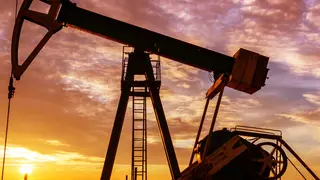
As international crude oil prices continue to surge relentlessly and touched $126 per barrel recently, India’s public sector oil marketing companies (OMCs) have been facing a severe cash crunch because of mounting losses on the sale of petroleum products. They are even finding it difficult to manage their working-capital requirements to keep their day-to-day operations going since there are limits on their borrowings from banks against the oil bonds issued to them by the government.

For more than two years now, the OMCs have been borrowing from banks to meet their working-capital requirements because of huge under-recoveries on the sale of petroleum products. IOC’s total borrowings as on March 31, 2009 were reported to be Rs 34,400 crore while those of HPCL and BPCL were Rs 16,000 crore and Rs 15,000 crore respectively.

According to reports, Reliance Industries has closed all its 1,432 petrol pumps in the country as buyers prefer outlets of public sector companies where fuel prices are lower because of heavy subsidies.

Moreover, the state-owned ONGC has decided to put on hold its retail outlet foray against the licence to open 1,600 outlets, including 500 outlets under MRPL.

COSTLY DITHERING

There has been a prolonged and costly dithering over the pricing of petroleum products even as the Reserve Bank of India and many experts have been expressing grave concern from time to time over the meagre pass-through of the burden of rising international crude prices. This has not only affected the investment plans of oil companies but has adverse implications for the entire economy. The excessive reliance on the issue of oil bonds will increase the Centre’s off-budget liabilities and jeopardise the fiscal management efforts. This is all the more so because the Government does not seem inclined to increase the budgetary allocation for subsidies.

In the 2008-09 Budget, it has been pegged at just Rs 2,884 crore compared to Rs 2,882 crore in the preceding year.

The most unfortunate part of the subsidy regime is the subsidies do not reach the really poor and the needy sections of society. According to estimates, hardly 50 per cent of the kerosene supplies are used for cooking purposes. The rest is used for adulterating diesel and petrol and for selling in the open market at exorbitant prices. In the case of LPG, it is mostly used by the non-poor (only 10 per cent of the households in the country).

During the NDA regime, an attempt was made to dismantle the administered pricing regime for the oil sector.

On April 1, 2002, the administered pricing for petrol and diesel was dismantled, though not in the case of kerosene and LPG. It was also decided to wind up the Oil Pool Account and the Oil Co-ordination Committee.

Even so, the goal of free pricing remained largely on paper as pricing decisions continued to be made by the Cabinet. Under the UPA government, the clock was completely turned back on oil sector reforms with the government usurping the right of OMCs to fix prices entirely.

A Committee headed by Dr C. Rangarajan on Pricing and Taxation of Petroleum Products, which submitted its report in February 2006, had rightly recommended that subsidies should be minimal, targeted and restrained by a monetary ceiling.

Moreover, it wanted that the burden of subsidies should be borne entirely and transparently by the national Budget and OMCs should be freed from this burden.

NO SOFT OPTIONS

The international crude prices have appreciated by over 100 per cent in the past one year. The average price of Indian crude basket per barrel rose steadily from $55.72 in 2005-06 to $62.46 in 2006-07, $79.25 in 2007-08 and zoomed further to $118.00 by early May 2008. Consequently, the under-recoveries of OMCs have risen to unsustainable levels now to Rs 20.17 in the case of diesel, Rs 13.79 per litre on petrol, Rs 28.72 per litre on kerosene and Rs 316 per cylinder on LPG.

As a result, the losses incurred by OMCs on the sale of these products have risen to Rs 70,579 crore during 2007-08 from Rs 49,387 crore in the preceding year. In the absence of any upward revision in prices soon, these losses could zoom to Rs 180,000 crore during the current fiscal.

With huge under-recoveries, the one-third burden sharing formula by each stakeholder — the government, OMCs and upstream companies such as ONGC — being followed at present, may not be sustainable. With projected losses during the current fiscal, each stakeholder may have to bear a burden of over Rs 60,000 crore.

Evidently, the Government is fast running out of soft options and it is time political populism gives way to economic pragmatism. True, the task is not going to be easy as the UPA Government appears reluctant to take hard economic decisions because of opposition of alliance partners. At the same time, continued dithering on the subject will certainly have serious economic consequences.

As the Chairman of IOC, Mr Sarthak Behuria, said, “We need a lasting solution, not ad-hoc responses. The government should free pricing of petrol and diesel from its control and subsidise domestic LPG and kerosene from its Budget.”

WHAT NEEDS TO BE DONE

A proper course for the Government would be to free petrol and diesel from the price control regime. At the same time, to soften the blow to consumers of these products and to reduce the inflationary impact, there is a need to suitably lower and rationalise the tax component on these items.

The tax component on these items is too high at around 40 per cent; the taxes and duties on crude and products add up to over Rs 100,000 crore, a big chunk of the total tax revenues of the Centre budgeted at over Rs 400,000 crore. By switching from ad-valorem to specific duties, the consumers could be offered substantial relief. The Centre should also persuade all state governments to levy a moderate, uniform sales tax on these products.

The issue of open-ended subsidies for kerosene and LPG needs to be urgently revisited. A moderate hike in the prices of kerosene and LPG with cash coupons to poor households for kerosene would be in order.

It is time to send out a clear policy signal that energy conservation is top priority and wrong price signals in this regard could be disastrous. The price signals should be used to trigger proper inter-fuel substitution, curb wasteful consumption and stimulate measures for energy efficiency. At present, the energy-intensity in the economy is unacceptably high.

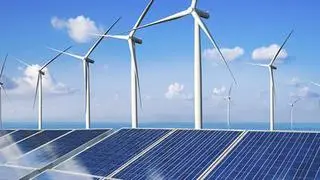
Among the long-term measures, greater efforts are needed for commercial exploitation of alternative sources of energy by stepping up research in solar, wind and bio-fuel energy from biomass and disposable waste.

More Stories on : Economy | Petroleum

Article E-Mail :: Comment :: Syndication :: Printer Friendly Page


Hiring

Stories in this Section
Cyclone watch in Arabian Sea called off


Suzlon posts strong growth despite paying for quality issues
Telecom cos save on revenue share, bring down STD rates
Telecom tower cos hit by rising steel prices
Govt yet to announce minimum support price for kharif crops
‘Current inflation level totally unacceptable’
Fuel pricing — Time for quick, hard decisions
Tepid numbers from Dr Reddy’s
Entertainment Network (Rs 433.1): Buy
Inclusion in MSCI India Index lifts JSW Steel
Day Trading Guide
Spiralling coal prices may push up cement cost further
Suzlon Energy reports 10% rise in Q4 net
Betapharm losses drag Dr Reddy’s Q4 net down 68%
Learning made easy through animation films
Tractor makers see sales taking a knock
Most banks comfortable with tractor loans
Marginal rise in Infosys’ brand value
Educomp buys 51% stake in US-based Learning.com
Uranium shortage hits Nuclear Power
The economy-stock market divergence


Smartbuy


The Hindu Group: Home | About Us | Copyright | Archives | Contacts | Subscription
Group Sites: The Hindu | The Hindu ePaper | Business Line | Business Line ePaper | Sportstar | Frontline | The Hindu eBooks | The Hindu Images | Home |

Copyright © 2008, The Hindu Business Line. Republication or redissemination of the contents of this screen are expressly prohibited without the written consent of The Hindu Business Line